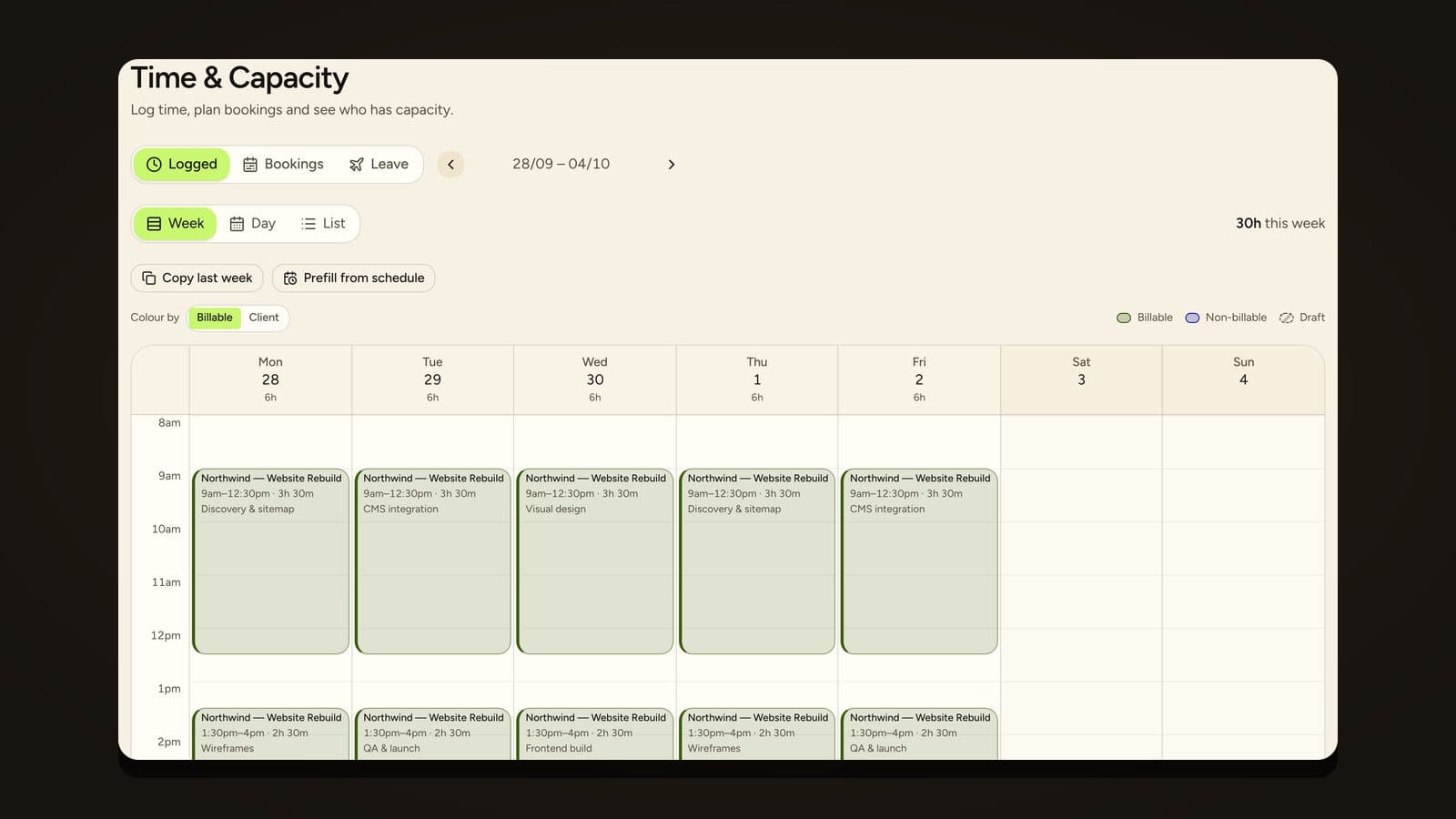
How to plan the studio week in 30 minutes
By Huw Cushing, Founder, Sprintora · · 5 min read
Weekly capacity planning for an agency does not need a long meeting or a perfect system. It needs a short routine that happens every week, in the same order, with the same people looking at the same plan. Thirty minutes on a Monday morning is enough for a studio of 10 to 50 people if you are clear about what you are checking.
Here is a routine that producers and studio managers can run, with the reasoning behind each step so you can adapt it.
Before you start
Have these ready: the list of live projects with their deadlines, last week's plan, the leave calendar, and any new work that landed over the weekend. If those four things take more than five minutes to find, that is your first improvement: put them in one place.
Minutes 0 to 5: Check the edges
Start with what constrains the week.
Who is on leave, part-time or out this week? Which public holidays fall in it, in which locations? What came in on Friday afternoon and over the weekend that changes priorities? Which projects have a deadline before Friday?
Writing these down first stops the common mistake of planning a full week for someone who is away on Wednesday.
Minutes 5 to 15: Place the work
Now put work against people. Go in this order.
Deadlines first. Anything due this week gets placed before anything else, and with the person best suited to it.
Retainers next. Retainer work has an agreed number of hours and a client expecting it. Booking it early stops project work from eating it.
Everything else last. Fill the remaining space with the rest of the work, and note what does not fit.
Match skills as you go. Having free hours is not enough: the person needs the skill the task calls for.
Minutes 15 to 22: Find the clashes
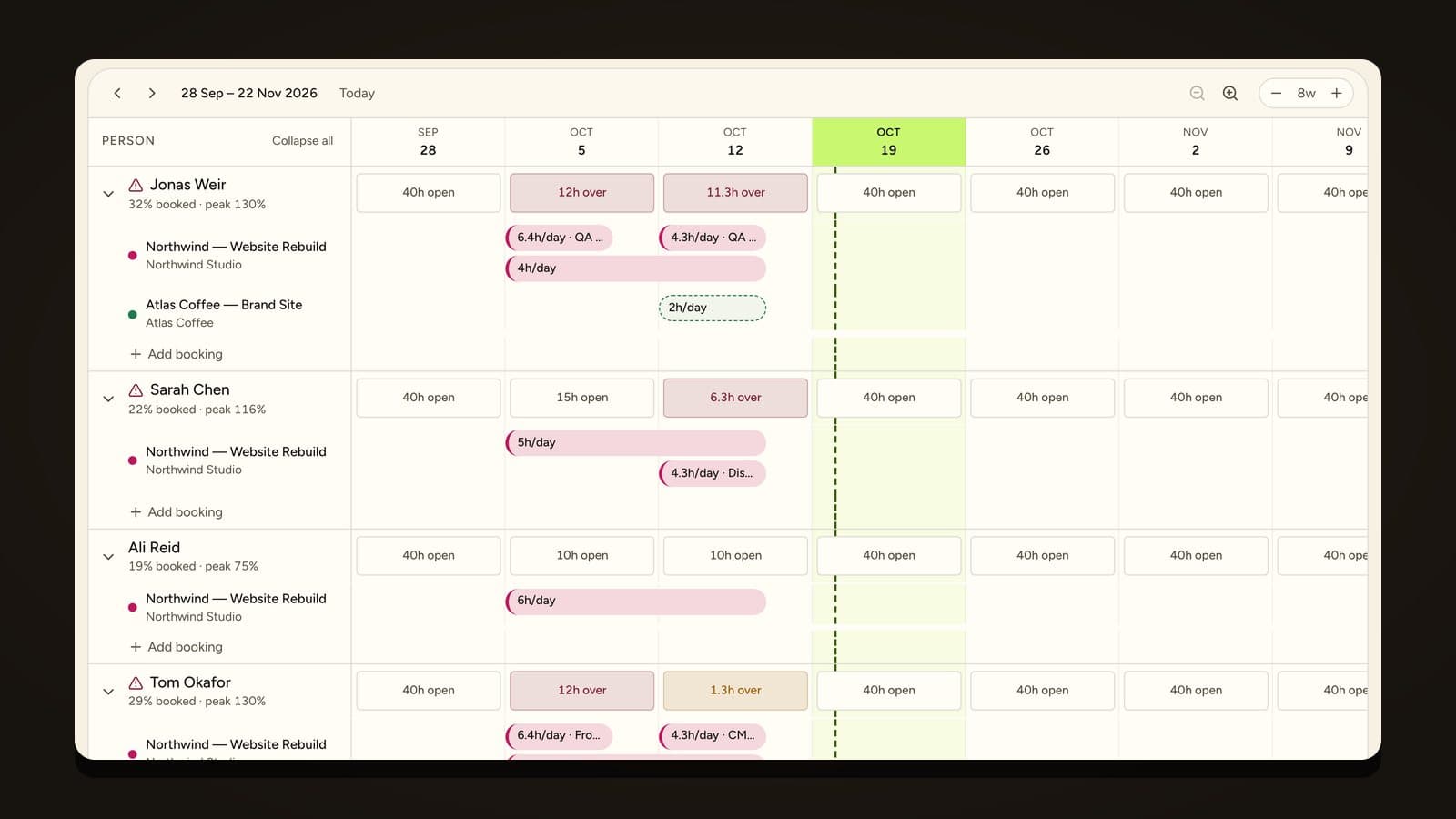
Look at each person's planned load for the week against their real capacity. Anyone planned past about 90% is overbooked. That threshold leaves space for a sick day, a round of feedback, and the late request that always turns up.
For each overbooked person, ask three questions in order. Can any of their tasks move to someone with the same skill who has room? Can anything slide to next week without a deadline being hurt? If neither, which scope has to give?
Look at the other end too. Someone planned at 50% is a resource the studio is paying for. Is there work they can pick up?
Minutes 22 to 28: Glance at margin
Pick the three projects that matter most this week and look at cost to date against budget. A project burning faster than it is progressing is cheaper to correct this week than next month. If the number looks wrong, flag it for the project lead and move on. The detailed conversation belongs outside this meeting. The fixed-fee profitability guide covers what to do next.
Minutes 28 to 30: Share the plan
Post the plan where people will see it. Some studios put it on a screen, some send it by email or in Slack or Microsoft Teams. The channel matters less than the habit. If people have to ask what they are doing on Tuesday, the plan is not doing its job.
Make the routine faster
Three things cut the time.
Keep tasks and estimates current. The plan is only as good as the hours behind it. If a task shows 8 hours and everyone knows it is really 20, the plan is wrong before it starts.
Keep leave in one place. Approved leave should come off capacity without anyone doing the sum.
Use a draft. Sprintora drafts the week from capacity, skills and existing bookings, flags overbooked people and suggests a fix, such as moving tasks from one person to two others who have room. You edit the draft, approve it and apply it. Nothing changes until you do. A weekly digest by email, Slack or Teams tells the team what changed, and quiet weeks send nothing.
What a good Monday plan looks like
Every person has a clear week with no one past 90%. Deadlines this week have named owners. Retainer hours are booked. The producer knows which two projects to watch. The team has seen it before they start work.
If you reach that in half an hour, you are doing better than most studios.
When the week goes sideways
A client changes the brief on Tuesday. Someone is sick on Wednesday. The plan will break, and that is fine. Re-plan the same day, in the same order: edges, work, clashes. A short routine is easy to repeat, which is its main advantage over a long planning meeting.
For the bigger picture across weeks and quarters, see the resource planning guide.
Frequently asked questions
How long should weekly resource planning take? Thirty minutes is enough for most studios if the data is in one place and you follow the same order each week. If it takes much longer, look for what is slowing you down: scattered leave data, out-of-date estimates or too many people in the room.
Who should be in the weekly planning meeting? The producer or studio manager who owns the plan, and the team leads who know their people. Keep it small. Share the result with everyone.
Should the whole team see the plan? Yes. A plan nobody sees is a guess, and people can spot mistakes you cannot.
What if priorities change midweek? Re-plan that day. A short routine is easy to run again, and a plan that is a day out of date is far better than one that is a week out.
Do we need a tool for weekly planning? Not to start. A tool becomes useful when you have more than a handful of projects and need leave, skills and margin in the same view.
Founding studios get Sprintora free until 31 March 2027, then A$12 per planned person per month. See pricing.