Agency retainer profitability: how to keep a monthly retainer in the black
By Huw Cushing, Founder, Sprintora · · 5 min read

Agency retainer profitability gets less attention than project margin, and it often deserves more. A retainer is a fixed fee with no end date. A small overrun that would sting once on a project repeats every month on a retainer, and the relationship feels so settled that nobody checks the numbers.
This guide covers how to set up a retainer so it can be profitable, how to track it each month, and how to review it before it quietly turns into your least profitable client.
Why retainers drift
Retainers start with a clear scope and a monthly fee. Then the client asks for small extras because the relationship is good. The team says yes because saying no feels awkward. Nobody records it as a change because it is only an hour. After six months the retainer is running at 140% of its hours, the client believes that is the normal service, and raising it now feels like taking something away.
A retainer also tends to be staffed by whoever is free. If the senior lead picks up the work because the junior is busy, the same hours cost much more than the retainer assumed.
Define the hours up front
State the monthly hours the fee covers and what happens past them. A shared number removes a lot of later arguments. A good retainer agreement says four things plainly.
What the retainer covers, in terms of deliverables or categories of work.
How many hours or days a month that equals.
How requests outside it are handled: priced as extras, queued for next month or swapped for something else.
What happens to unused hours: roll over for a limited time, or lapse.
Write these into the agreement, not into a conversation. A line in a document is the easiest thing to point at in month five.
Track burn each month
Each month, compare hours used with hours covered. Look at three things.
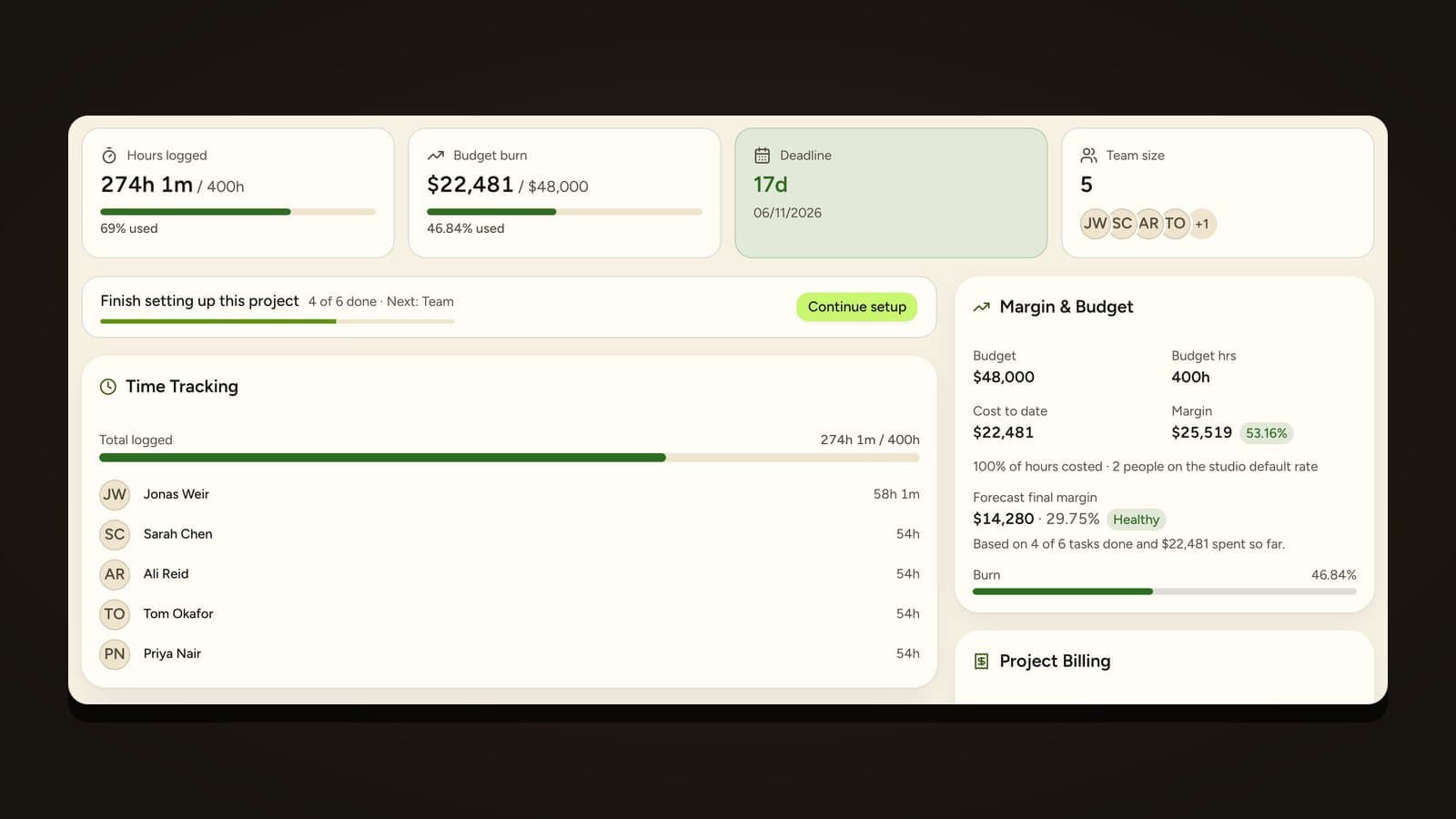
Hours used against hours in the retainer. One month over is an accident. Three months over is a pattern, and the fee or the scope needs to change.
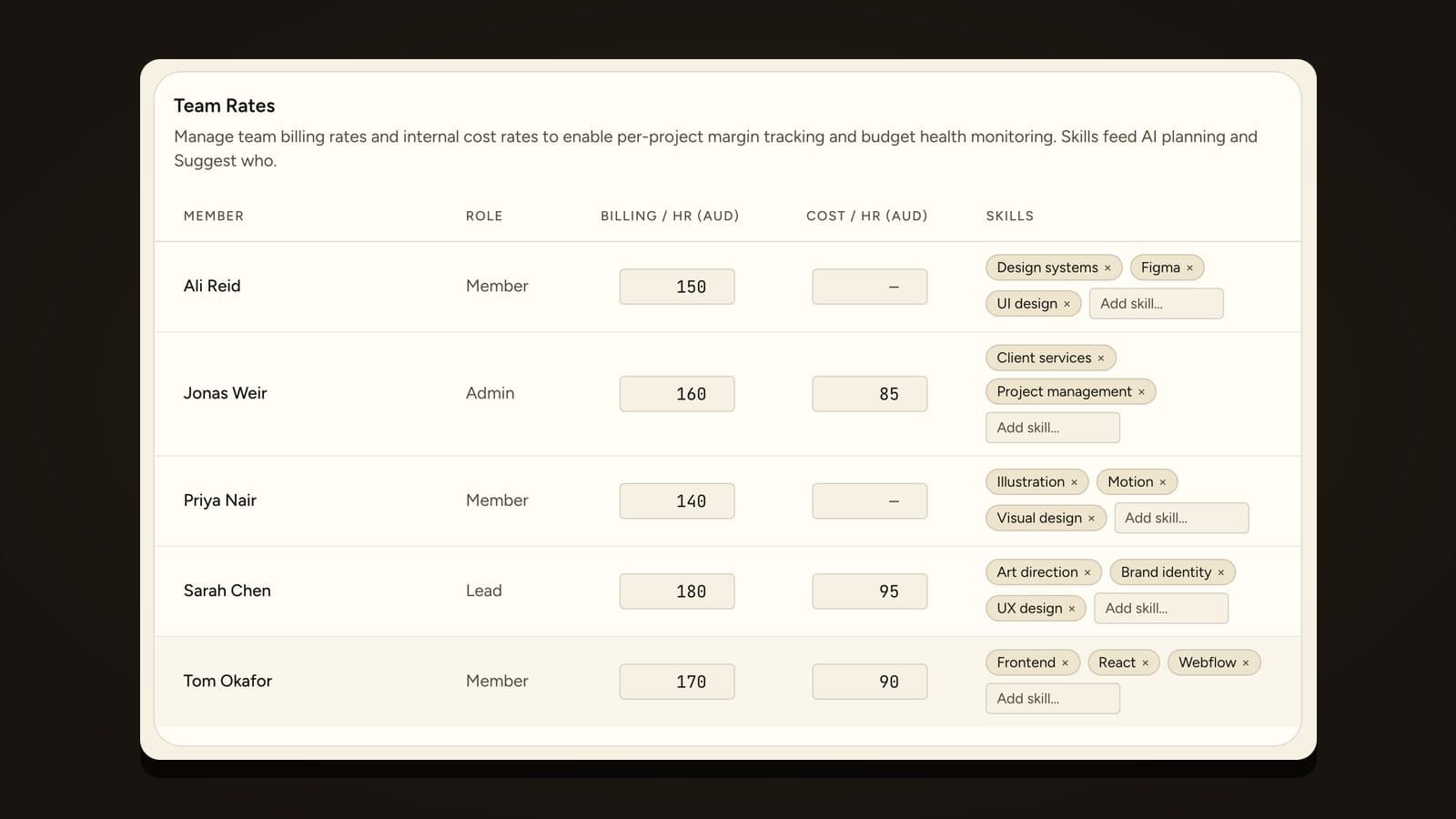
Who did the hours. A retainer sold on a mixed team and delivered by seniors will cost more than it appears. Hours alone will not show this.
What the hours were spent on. If a third of the time goes on a category not in the agreement, you have found scope creep, and you have the evidence to talk about it.
Review these at the same point each month so the pattern is visible, and share them with the account lead.
Check margin as well as hours
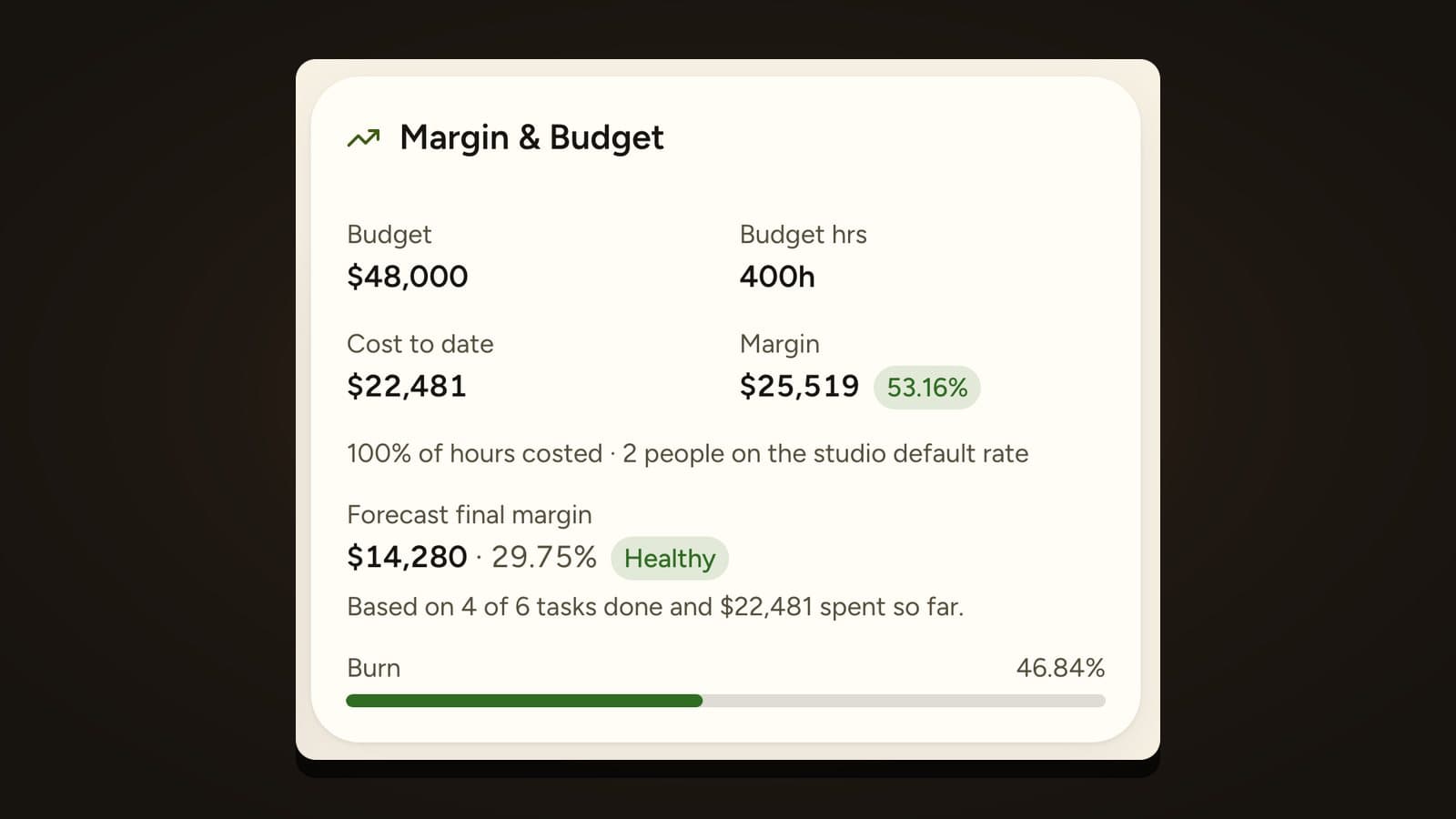
The same 40 hours cost more with a senior team than with a mixed one. Retainer margin is the fee minus the cost of the hours, using cost rates. The project margin guide shows how to calculate it, and the same sums work month by month.
Here is an example with invented figures. A retainer of A$8,000 a month covers 50 hours. If the hours are delivered by a team with an average cost rate of A$80, cost is A$4,000 and margin is 50%. If senior time creeps in and the average cost rate becomes A$110 for 58 hours, cost is A$6,380 and margin is 20%. The retainer looked fine on hours (58 against 50). It looked worse on margin, and worse still because that pattern repeats every month.
Review it every quarter
Once a quarter, look at the last three months and ask whether the retainer still makes sense.
Scope. Is the client asking for different work from the original agreement?
Rate. Has your cost base moved, with salary reviews, a new tool or a rise in overheads, since you set the fee?
Team mix. Is the right level of person doing the work?
Reprice or rescope while the relationship is good. Raising a fee with a clear explanation after a stable quarter is routine. Doing it after a year of silence is a crisis.
Book the capacity
Retainers need predictable time because the client expects the work to happen every month. Put retainer hours on the schedule first, before project work, so a busy project does not quietly consume them. The resource planning guide explains how to hold capacity for committed work.
What to do with a retainer that loses money
First, confirm it with numbers. Compare cost to date with fees for the last three to six months using real cost rates.
Second, decide what the fix is. It might be scope (tighten the agreement), team (move work to a lower cost rate), fee (reprice at the next review) or exit (some retainers cost more than they are worth).
Third, have the conversation with facts: hours covered, hours used, what the extra work was. Most clients react better to a clear picture than to a vague complaint.
Frequently asked questions
What is a healthy margin on an agency retainer? It depends on your overheads and target. Set a margin goal before you price the retainer, work back to the fee, and track against it monthly.
What happens when a client needs more hours than the retainer covers? Offer a larger tier, agree a clear change request for the extra work, or swap something out. Write the rule into the retainer agreement so it is not a surprise.
Should unused retainer hours roll over? Decide at the start and write it down. Many studios allow a short rollover (a month or a quarter) and let hours lapse after that, so retainers do not accumulate liability.
How do I spot a retainer that loses money? Track cost to date against the monthly fee, using real cost rates for the people who did the work. Look at it over several months rather than one.
How often should I review a retainer? Check burn monthly and review scope, rate and team mix quarterly.
Founding studios get Sprintora free until 31 March 2027, then A$12 per planned person per month. See pricing.