Cost rate vs bill rate: what each one tells a studio
By Huw Cushing, Founder, Sprintora · · 5 min read
Cost rate and bill rate are two different numbers that people in studios often treat as one. Bill rate is what you charge for an hour. Cost rate is what an hour costs you. Margin lives in the gap between them, so you need both written down, and you need to keep them apart.
This guide explains each rate, shows how to work out a cost rate from salary, and covers the mistakes that make a studio's margin look healthier than it is.
Bill rate: what the client sees
Your bill rate is the rate on your rate card. It is also the rate a fixed fee implies when you divide the fee by the hours you expected to spend. Bill rates drive quotes, appear in proposals and get negotiated. They answer the question "what do we charge?"
Studios often have several: a senior rate, a mid rate, a junior rate, and a blended rate for fixed-fee work. On a fixed-fee project the client never sees your rates, but they still exist inside your estimate.
Cost rate: what the hour costs you
A cost rate is the loaded cost of one productive hour of a person's time. Loaded means it carries more than salary.
Annual cost = salary + super + payroll tax and insurances + the share of overheads you attribute to the person (rent, software, equipment, leadership time).
Cost rate = annual cost divided by productive hours in the year.
The word that matters is productive. A full-time year has about 2,080 paid hours, but nobody delivers 2,080 hours of project work. Take out annual leave, public holidays, sick days, training, internal meetings, admin and the pitching that does not get billed. Work out your own figure. It is usually well under the paid year, and lower again for a lead who spends time managing.
A worked example
Take a mid-weight designer with a A$95,000 salary. Super at 12% adds A$11,400. Add A$4,000 for equipment, software and insurance. Add A$18,000 as their share of rent and overheads. Total loaded cost: A$128,400.
Say they have 1,500 productive hours in the year. Cost rate: 128,400 divided by 1,500, which is A$85.60 an hour.
Now say your bill rate for that role is A$150. The simple gap is A$64.40 an hour. That is the contribution one billed hour makes towards profit. Every hour that is worked and not billed costs you the full A$85.60 and contributes nothing.
(The figures above are illustrative. Use your own.)
Why mixing them up costs money
A bill rate of A$150 sounds like an A$150 hour. If you plan and report using bill rates alone, every project looks profitable until the bank statement says otherwise. The error is invisible because the maths on the page is consistent. It is just answering the wrong question.
Three common consequences:
Quotes get built from bill rates with no check on cost, so thin projects get signed.
Project reports show "revenue per hour" and never show cost, so a project that burned 40 extra hours of senior time looks fine.
Freelancers and juniors get treated as interchangeable on the schedule, even though one costs A$50 an hour and the other A$130.
Do freelancers have a cost rate?
Yes. A freelancer's cost rate is what they invoice you, per hour or per day divided by the hours in it. There are no overheads to add unless you provide equipment or space.
Which overheads belong in a cost rate?
Include a fair share of what it costs to keep the doors open: rent, software, equipment, accounting, insurance and the time owners spend running the business. Leaving overheads out flatters every project and is the reason many studios feel busy and broke.
You do not need a perfect split. A reasonable method is to total overheads for the year and divide by total productive hours across the team, then add that figure to each person's hourly cost. It treats everyone equally, which is a fair starting point.
Keep cost rates private
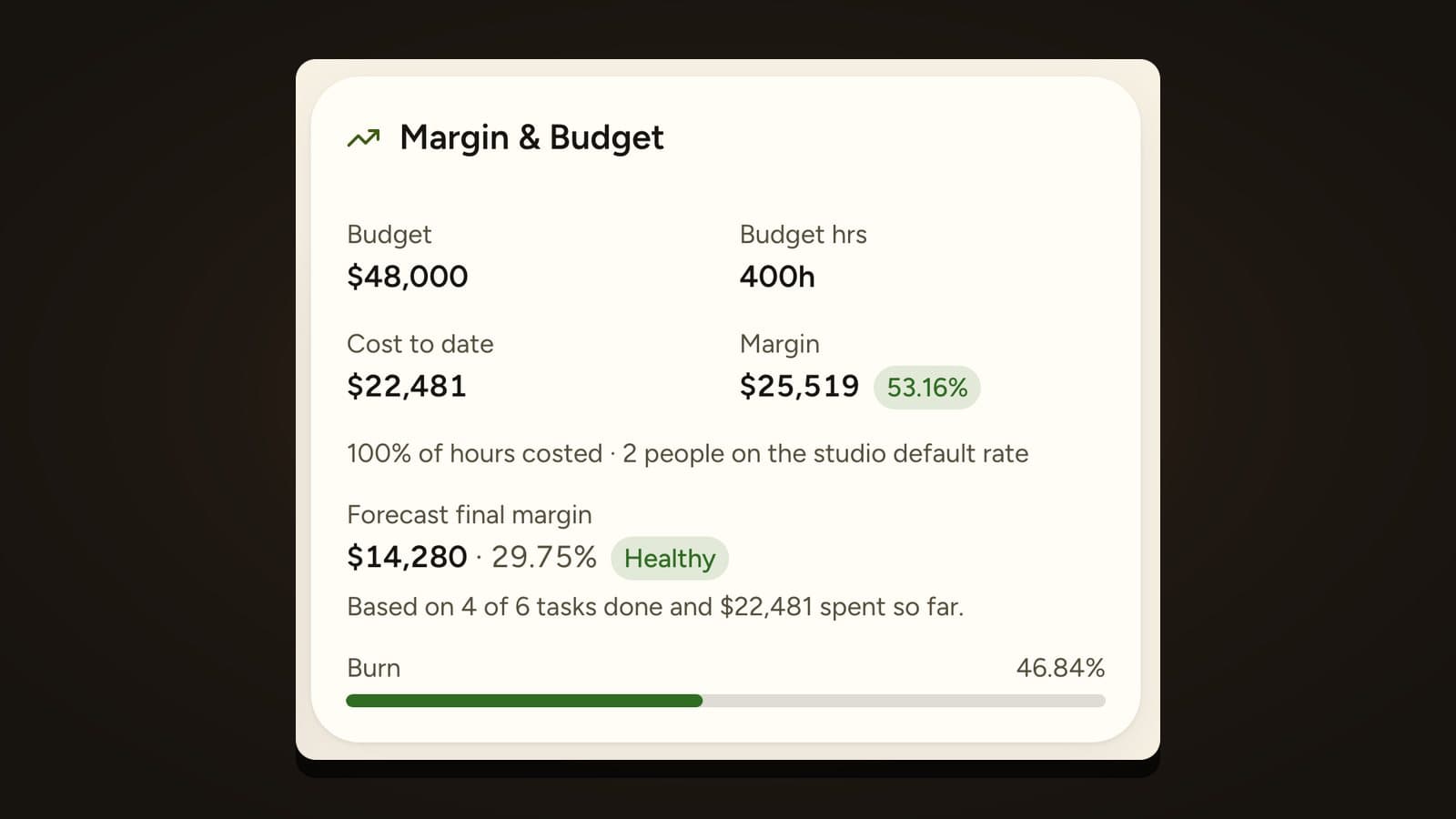
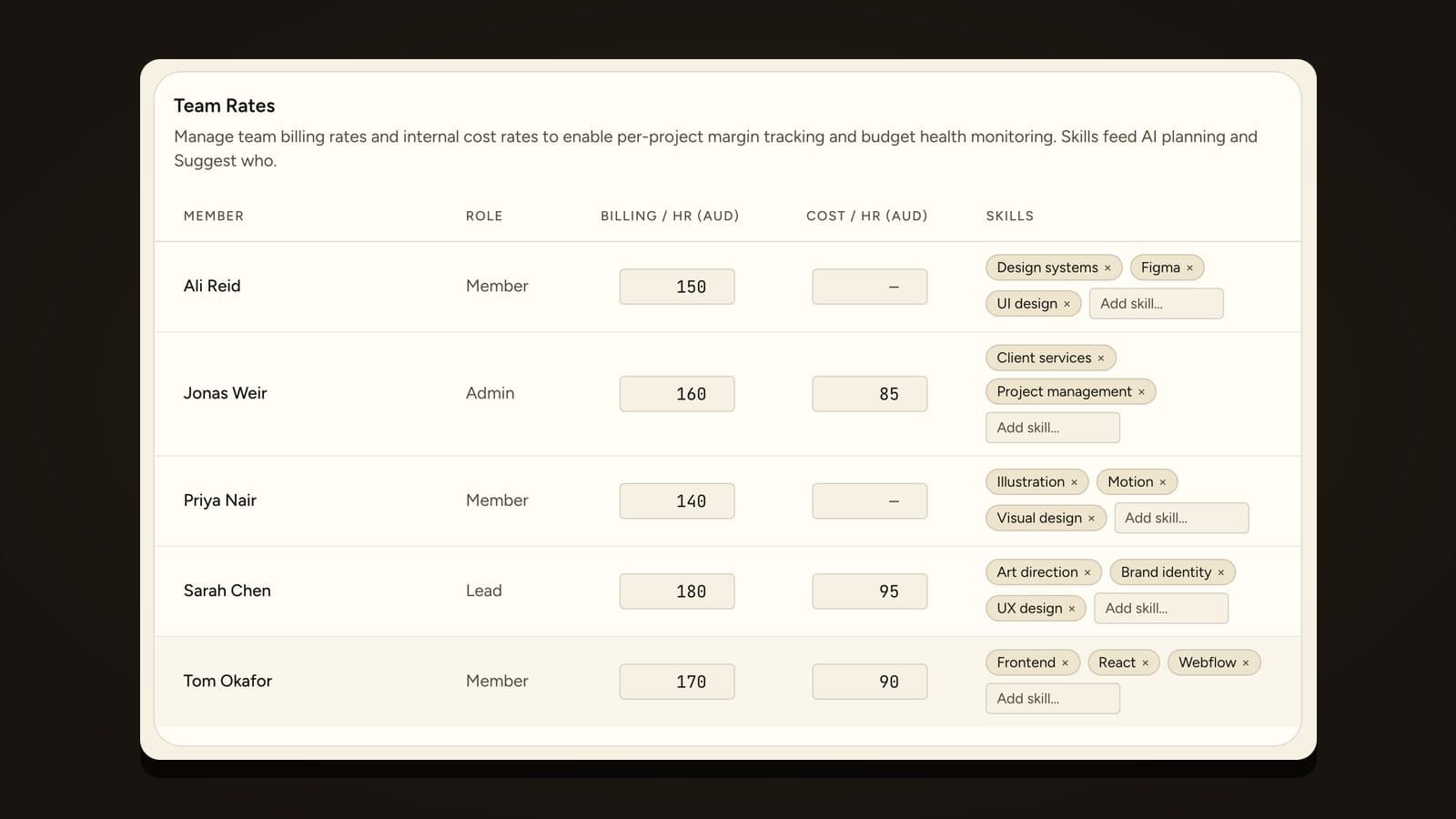
Cost rates reveal salaries. In Sprintora, margin, cost and rate figures are visible to admins only, so a producer can plan the week and see who is booked without seeing anyone's pay. If you build your own sheet, give it the same care.
How often to update them
Review cost rates once a year, and any time someone's pay or hours change. Rates drift quietly. A studio that set its rates in 2023 and never touched them is costing projects with the wrong numbers.
Set them this week
- List each person's loaded annual cost.
- Estimate their productive hours honestly, starting from the paid year and taking out what you know is not project time.
- Divide, and write the result down as their cost rate.
- Enter the rates in the place where hours are logged, so every confirmed hour is costed automatically.
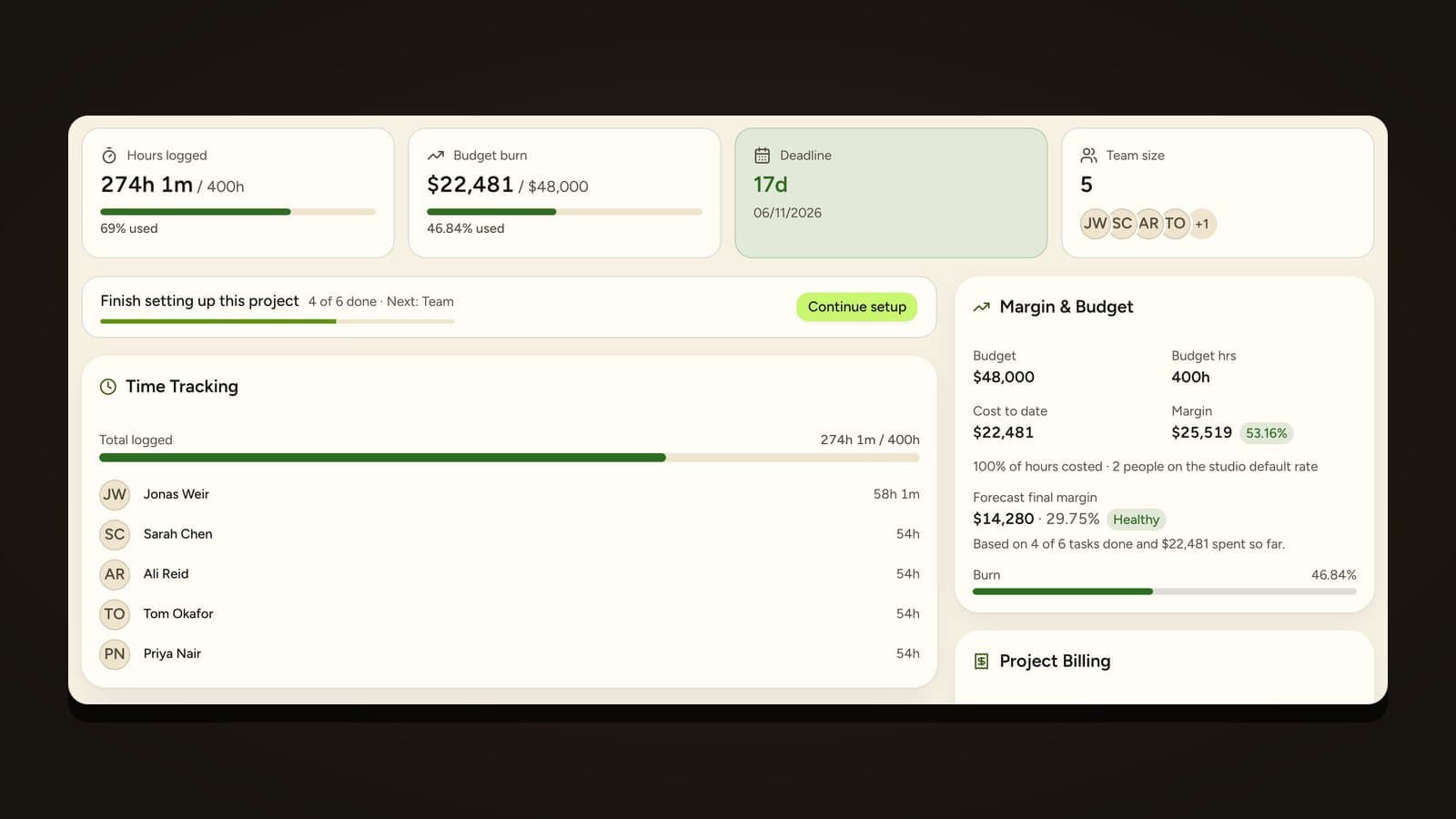
Once rates are in, margin per project is a sum you do not have to do by hand. The project margin guide shows how the rates feed the forecast. If any hours arrive without a rate, say so on the number. Sprintora flags those hours so the margin does not quietly read high.
Frequently asked questions
What is the difference between cost rate and bill rate? Cost rate is what an hour of someone's time costs you, loaded with super, overheads and so on. Bill rate is what you charge a client for that hour. Margin is the gap, once you have accounted for hours that were not billed.
How do I calculate a cost rate per hour? Add salary, super, other employment costs and a share of overheads for the year, then divide by the productive hours that person actually has. Productive hours are less than paid hours, because leave, holidays and admin come out.
What is a typical cost rate for a designer in Australia? It depends on salary, location and overheads, so any single figure would be a guess. Work out your own from the steps above rather than borrowing one.
Should a cost rate include overheads? Yes, a fair share. Without overheads, cost rate understates the real cost of an hour and every project's margin looks better than it is.
Can I use the same cost rate for everyone? You can as a starting point, but it hides the difference between senior and junior time, which is where much of the margin movement happens. Individual rates, or at least a rate per role, give a more honest picture.
Founding studios get Sprintora free until 31 March 2027, then A$12 per planned person per month. See pricing.